Showing posts with label rbz54. Show all posts

Tuesday, May 8, 2007

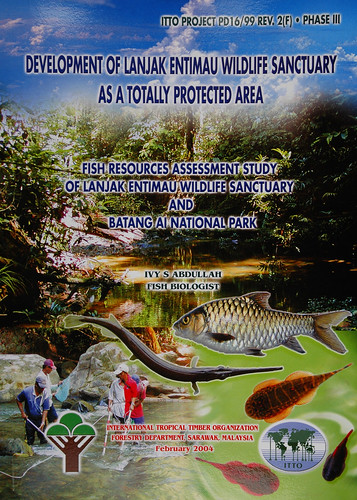
"Development of Lanjak Entimau Wildlife Sanctuary as a Totally Protected Area" by Ivy S Abdullah (2004)

Development of Lanjak Entimau Wildlife Sanctuary as a Totally Protected Area - Fish resources assessment study of Lanjak Entimau Wildlife Sanctuary and Batang Ai National Park. By Ivy S Abdullah, 2004. International Tropical Timber Organization. Forestry Department, Sarawak, Malaysia. ITTO project PD16/99 rev. 2(F), phase III, vii+70 pages.


This is a well illustrated medium sized volume covering the freshwater fishes of the catchment area of the Lanjak Entimau Wildlife Sanctuary (Rejang basin) and Batang Ai NationalPark (Lupar basin).

This publication covers mainly the fish diversity, recommendations for conservation and possible applications in aquaculture and aquarium trade. The fish list draws from several earlier unpublished reports and substantiates the findings with more records and lists possible new species.

The maps provided are very detailed contour maps of poor resolution. Simpler line drawing maps would have been sufficient.

Several tables are provided listing the fish obtained from the abovementioned areas. Table 2 provides a fish list from Lanjak Entimau Wildlife Sanctuary, of which several species are of questionable identities; as follows:
Gastromyzon contractus – as from illustrations from plate 25, it is G. fasciatus;
Gastromyzon ridens – from current understanding (and unpublished data), it is restricted to the Kapuas basin;
All three species of Glaniopsis – from current understanding (and unpublished data), they are all restricted to their respective type localities and basins.
However, these cannot be confirmed till the actual specimens are examined.

Table 4 provides a fish list from Batang Ai National Park, of which several species are of questionable identities; as follows:
Akysis baramensis – this is a rather southern distribution from the type locality, more detailed examination required to clarify the identity;
Gastromyzon borneensis - from current understanding (and unpublished data), it is restricted to western Sabah;
Gastromyzon ridens – from current understanding (and unpublished data), it is restricted to the Kapuas basin;
All three species of Glaniopsis – from current understanding (and unpublished data), they are all restricted to their respective type localities and basins.
However, these cannot be confirmed till the actual specimens are examined.

At least one reference is missing, e.g. Roberts, 1980, in which the year could be wrongly quoted. This publication suffers from outdated taxonomical names and identifications, as follows:
Plate 3 – should be Puntius banksi juvenile
Plate 5 – should be Lobocheilos sp.
Plate 6 – should be Osteochilus sarawakensis
Plate 10 – should be Auriglobus nefastus
Plate 13 – should be Rasbora agyrotaenia
Plate 15 – should be Rasbora caudimaculata
Plate 18 – should be Glyptothorax major
Plate 20 – should be Clarias leiacanthus
Plate 21 – should be Barbonymus collingwoodi
Plate 24 – should be Schismatorhynchos holorhynchos
Plate 25 – should be Gastromyzon fasciatus
Plate 33 – should be Homaloptera nebulosa
Plate 35 – should be Nemacheilus saravacensis
Plate 36 – should be Neogastromyzon cf. pauciradiatus
Plate 37 – should be Leiocassis poecilopterus
Plate 38 – should be Pseudomystus rugosus
Plate 45 – should be Macrognathus circumcinctus
Plate 47 – should be Schismatorhynchos holorhynchos

This publication also lists good recommendations for the conservation of the areas mentioned. Also providing avenues for local people’s involvement through aquaculture of local fish species, e.g. Tor spp.

Despite these shortcomings, this is a timely publication to illustrate the real state of knowledge we have of the tropical biodiversity in Southeast Asia. It is a commendable effort for the author to publish this despite restricted access to updated publications and taxonomical help.

Tan Heok Hui
Department of Biological Sciences
National University of Singapore
Kent Ridge 119260
Republic of Singapore

First published in The Raffles Bulletin of Zoology Vol. 54(1): 201-202 on 28 Feb 2006.

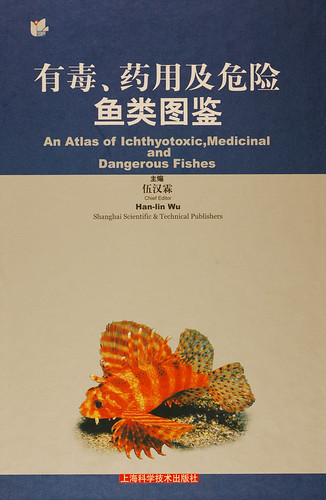
"An Atlas of Ichthyotoxic, Medicinal and Dangerous Fishes" by Wu, H.-L., D.-H. Chong, Y. Mou, Y.-H. Chen & Y. Ni (2005)

An Atlas of Ichthyotoxic, Medicinal and Dangerous Fishes. By Wu, H.-L., D.-H. Chong, Y. Mou, Y.-H. Chen & Y. Ni, 2005. Chief Editor: Wu, H.-L. Shanghai Scientific & Technical Publishers, Shanghai, v+482 pages. ISBN: 7-5323-7996-5 [in Chinese].


This is a small hardcover volume (15 x 21 cm) dealing with all toxic fishes, but also covering fishes consumed for medicinal purposes.

The colour plates are situated at the start, with 8 pages depicting 31 species. This mini-tome covers 422 species of freshwater and marine fishes. The atlas is divided into 3 main parts – toxic, medicinal and dangerous fishes. The first part deals with ciguatoxic fishes, covering 9 sections – flesh-toxic, tetraodontoxic, ichthyootoxic, gall bladder-toxic, ichthyohemotoxic, ichthyohepatotoxic, pelagic species-toxic, gempylotoxic and carchatoxic species. The second part deals with fishes of medicinal properties. The third part deals with dangerous fishes, covering 4 sections – biting, electrical, saw snouts and parasitic species.

All species come with a one page account, starting with the Chinese vernacular and scientific names, then describing morphology, habit, first aid technique or medicinal benefits. All species accounts are illustrated with line drawings.

This is a very interesting and informative volume for the layperson, hobbyist, scientist and gastronomist.

Tan Heok Hui
Department of Biological Sciences
National University of Singapore
Kent Ridge 119260
Republic of Singapore

First published in The Raffles Bulletin of Zoology Vol. 54(1): 201 on 28 Feb 2006.

Monday, May 7, 2007

"A First Look at the Fish Species of the Middle Malinau" by Rachmatika, I. et al. (2005)

A First Look at the Fish Species of the Middle Malinau - Taxonomy, ecology, vulnerability and importance. By Rachmatika, I., R. Nasi, D. Sheil & M. Wan, 2005. Center for International Forestry Research (CIFOR), Bogor, Indonesia. vi+34 pages. www.cifor.cgiar.org ISBN: 979-3361-67-0.


This is an A4-sized volume covering the freshwater fishes of the middle Malinau (tributary of the Sesayap River), East Kalimantan, Indonesia. This is basically a technical report based on field collections conducted in 1999 and 2000. The site was chosen because it was adjacent to the Kayan Mentarang National Park.

Surveys were conducted in both pristine and logged habitats of the Seturan catchment for comparisons. The local Punan, Merap and Kenyah communities were also interviewed and socio-economic data gathered.

Over the course of the surveys, a total of 47 fish species was obtained. Fishes from the Cyprinidae family consist the bulk of catch (68%). There were also possible new species obtained (e.g. Puntius and Gastromyzon). Species potentially vulnerable to logging activities were highlighted. Impacts of logging on the fish fauna were also discussed. Logged habitats yield lower diversity and abundance of fish species.

Two appendices were included. Appendix 1 listing the collection stations. Appendix 2 provided an annotated list of fish species obtained. The systematics used is not updated, e.g. Belontiidae had been synonymised with Osphronemidae, Barbonymus is a senior synonym to Barbodes. The species list is listed alphabetically by family name and not in the taxonomic order.

Despite the few shortcomings, this is a timely publication to illustrate the real state of knowledge we have of the tropical biodiversity in Southeast Asia. It is a commendable effort for the authors to publish this despite restricted access to updated publications and taxonomical help.

Tan Heok Hui
Department of Biological Sciences
National University of Singapore
Kent Ridge 119260
Republic of Singapore

First published in The Raffles Bulletin of Zoology Vol. 54(1): 200 on 28 Feb 2006.

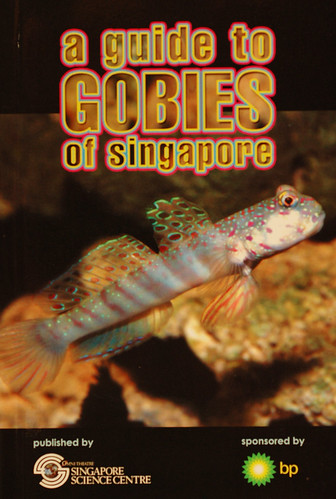
"A Guide to Gobies of Singapore" by Larson, H. K. & K. K. P. Lim (2005)

A Guide to Gobies of Singapore. By Larson, H. K. & K. K.P. Lim, 2005. Singapore Science Centre, 164 pages. ISBN: 981-05-3407-8.


This is a small pocketsized volume richly filled with colour plates, covering the freshwater, brackish water and marine gobies of Singapore. This is the 40th book in the series of guides to Singapore sponsored by BP.

This book covers the 3 families from the sub-order Gobioidei found in Singapore – Eleotridae, Gobiidae and Microdesmidae. The family Gobiidae is the largest in the sub-order and most gobies are typified by having two dorsal fins and fused pelvic fins. The authors had provided a comprehensive taxonomic key to the 60 genera located from Singapore. This book is a cumulative effort of 10 years between the two authors, one based in Darwin, Australia, and the other in Singapore.

The habitats of the gobies in general and a fold-out map of Singapore are provided, giving readers an idea of the diversity of habitats gobies are found in. Another fold-out of the general morphology of gobies is included to give readers an idea of the variable body forms of gobies.

A total of 106 species is covered with one species per page, most with life coloration or preserved specimens depicted, along with numerous line drawings. Each species is listed with both vernacular and scientific names; followed by a brief diagnosis, description and distribution.

This is a most compact and comprehensive volume to peruse for the layperson, hobbyist and gobiologist.

Tan Heok Hui
Department of Biological Sciences
National University of Singapore
Kent Ridge 119260
Republic of Singapore

First published in The Raffles Bulletin of Zoology Vol 54(1): 200 on 28 Feb 2006.

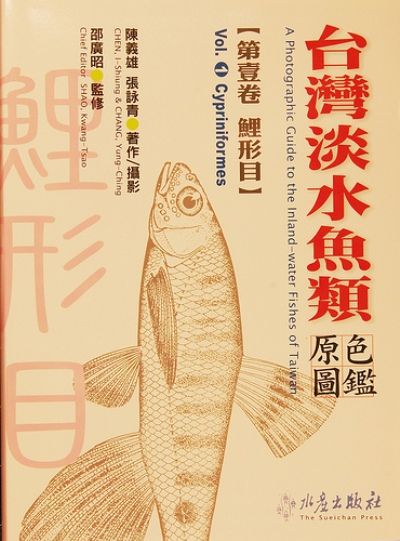
"A Photographic Guide to the Inlandwater Fishes of Taiwan" by Chen, I. - S. & Y. - C. Chang (2005)

A Photographic Guide to the Inlandwater Fishes of Taiwan. Volume 1. Cypriniformes. By Chen, I-S. & Y.-C. Chang, 2005. Managing editor: Shao, K.-T. The Shueichan Press, Taiwan R.O.C., xx+284 pages. ISBN: 957-8596-72-3, obtainable from www.scppress.com, priced at USD50.


This is a medium sized (26 x 20 cm) bilingual (in Chinese and English) volume lavishly filled with colour plates, covering the cypriniform fishes of Taiwan. This is the first of five volumes covering all the inland freshwater fish species of Taiwan. Volume 1 covers only the cypriniform fishes, with a total of 45 species (35 cyprinids, 6 balitorids and 4 cobitids). Volume 2 covering the Gobiidae, volume 3 the miscellaneous taxa, volume 4 the anguillid and synbranchid eels, and volume 5 the phylogeny of Taiwanese freshwater fish.

There are between 4 to 6 full pages devoted to each species. Each species is listed by both scientific and vernacular names, including sub-family designation. Each species account is further divided into three sections, covering morphology, distribution, and ecology and remarks. The authors had spent much time here and list some very valuable ecological observations of the fish species.

Richly illustrated with almost all living material, photographed from various angles showing different life stages (e.g. Metzia mesembrina) and developmental stages of tubercle formation (e.g. Candidia barbata). The photographers are highly commended for their patience to get properly acclimatized fish and some species even in their breeding colours. Most species accounts are also accompanied by a habitat picture.

This publication also includes 2 appendices, covering 10 introduced and 3 doubtful species. There are a total of 5 species with uncertain identifications, highlighting the current taxonomical status.

One shortcoming of this vivid volume is the lack of a general map or individual maps showing distribution of the fish species.

This is a delightful volume to read and browse through for the layperson, hobbyist and scientist.

Tan Heok Hui
Department of Biological Sciences
National University of Singapore
Kent Ridge 119260
Republic of Singapore

First published in The Raffles Bulletin of Zoology Vol. 54(1): 199 on 28 Feb 2006.